
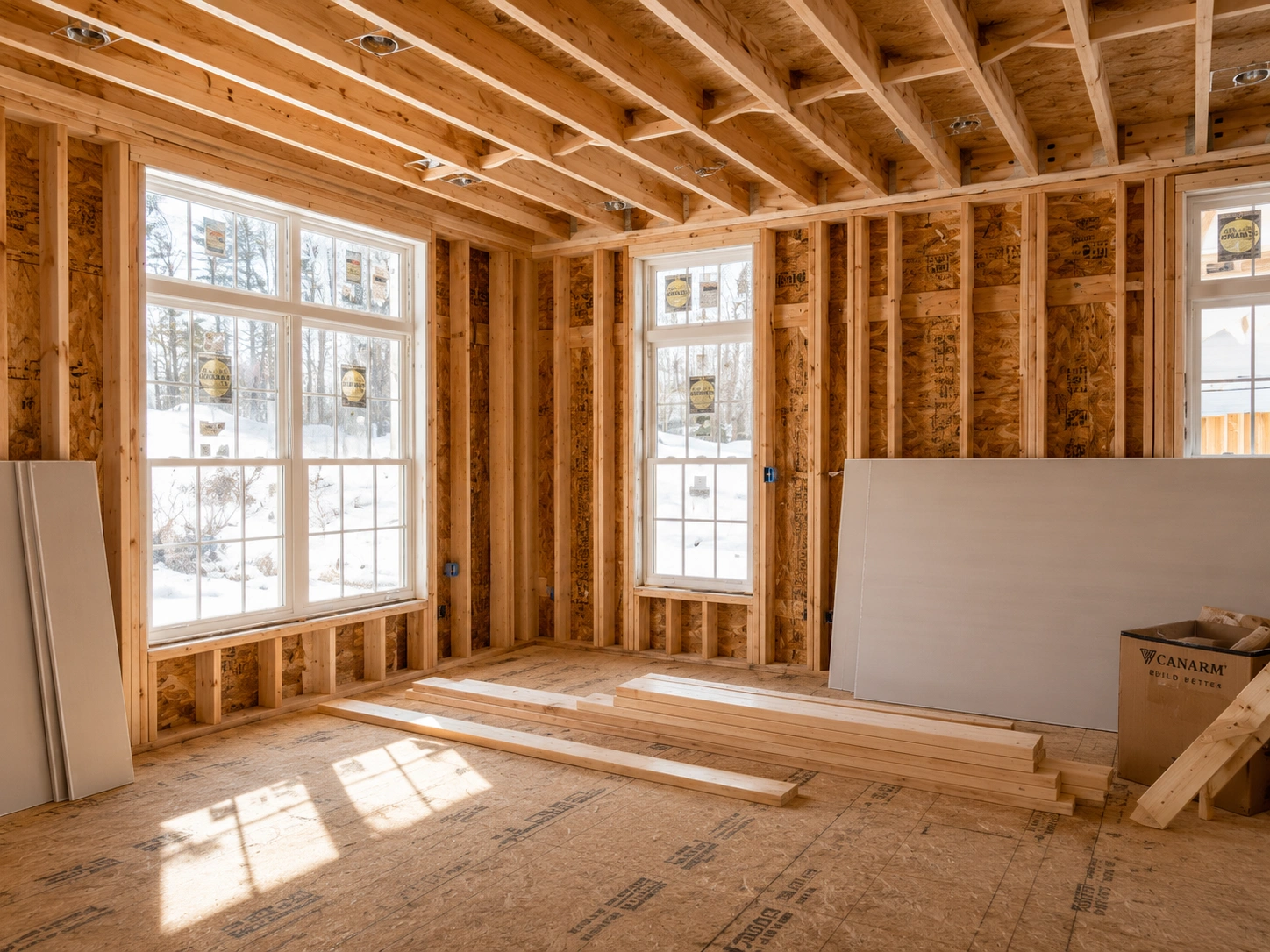
Budget: Before the Direction Is Locked
Build the financial decision around the job as a whole, not a single trade or square-foot number. Design development, engineering, permits, temporary conditions, site work and owner-purchased items can sit outside an early construction figure. If the preferred solution would involve creating a roof valley or wall joint that concentrates water, carry that consequence explicitly in the documented scope instead of hiding it in contingency.
The estimate should account for whether the decision changes roof tie-in and drainage or new-to-existing wall and air-barrier transitions. Preserve useful original fabric when it performs well, but do not let cosmetic preservation conceal unsafe or failing systems. The team should specifically check for starting detailed design before basic feasibility is checked and an existing foundation being assumed to carry new loads without verification.
In an older house, selective opening and targeted testing can sometimes answer expensive questions before committing to a full gut. Pre-1978 painted surfaces require special attention because renovation can create lead dust. Paid contractors working on covered projects generally need EPA lead-safe certification and work practices unless an applicable determination or exception applies.
Field Checks for Budget
- Confirm grading, drainage and site access before ordering, rough-in, or another trade depends on it.
- Record the agreed zoning envelope, setbacks and lot constraints before the field sequence is released.
- Show existing foundation and structural load path in the plans or written scope before construction starts.
- Identify the project role expected to build the budget around the complete tie-in, not just new square footage.
- Put responsibility for the following in writing: verify zoning and site feasibility before full design.
Older homes deserve a preconstruction investigation that looks beyond finishes. Electrical, plumbing, framing, moisture, previous alterations and hazardous-material risks can all change the viable scope. Compare the options by the usable space gained, impact on the yard and existing house, structural complexity, disruption and long-term usefulness. Compare the visible feature together with the repair and coordination work around it. Only then are the alternatives comparable because each path carries the work it actually creates.
Downstream Scope to Include in the Price for Budget
| Decision test | What to ask | Why it matters |
|---|---|---|
| Problem solved | What practical budget problem does this option solve? | Separates a useful upgrade from complexity added for its own sake. |
| Current field condition | What is known about grading, drainage and site access? | An unknown condition needs investigation, a stated assumption, or a defined allowance. |
| Related work | What changes in zoning envelope, setbacks and lot constraints? | Avoids comparing one complete option with another that omits dependent work. |
| Soft costs | Does the choice add design development, engineering, permits or review? | Keeps design, engineering, permit, and review costs from disappearing outside the bid. |
| Field risk | If an issue involving square footage being designed outside the buildable zoning envelope changes the scope, how will it be verified, priced, and approved? | Creates a written path for handling a condition that changes the scope. |
| Closeout | What must be verified or documented before the budget scope is closed? | Installation alone is not always the end of the construction scope. |
The construction sequence needs the same review as cost.
Regulatory Checks for This Decision for Budget
- Verify the existing condition of grading, drainage and site access.
- Carry one practical budget fallback through preconstruction until the unknown is closed.
- Evaluate more than one buildable option before resolving existing foundation and structural load path.
- Price the full budget scope created by the decision, not the visible item alone.
- Record the selected budget approach in the plans, specifications, or written scope.
- Release later work only after the budget choice is documented.
The goal of this process is not to default automatically to the lowest first cost.
From Budget Preference to Construction Scope
The scope should make three things explicit: grading, drainage and site access, how it relates to zoning envelope, setbacks and lot constraints, and who controls existing foundation and structural load path.
- What condition already on site could make the proposed budget solution impractical?
- Are there approval requirements that could change the budget design or schedule?
- What budget decision or delivery must be complete before the field sequence continues?
Preconstruction Questions
Three checks should be closed before the budget direction is released: grading, drainage and site access; the effect on zoning envelope, setbacks and lot constraints; and clear scope for existing foundation and structural load path.
Document the decision alongside grading, drainage and site access before work starts.
Use square footage being designed outside the buildable zoning envelope as the final verification point. In a home-addition project, a clear fallback is often what prevents a localized discovery from forcing a redesign across several trades.
