
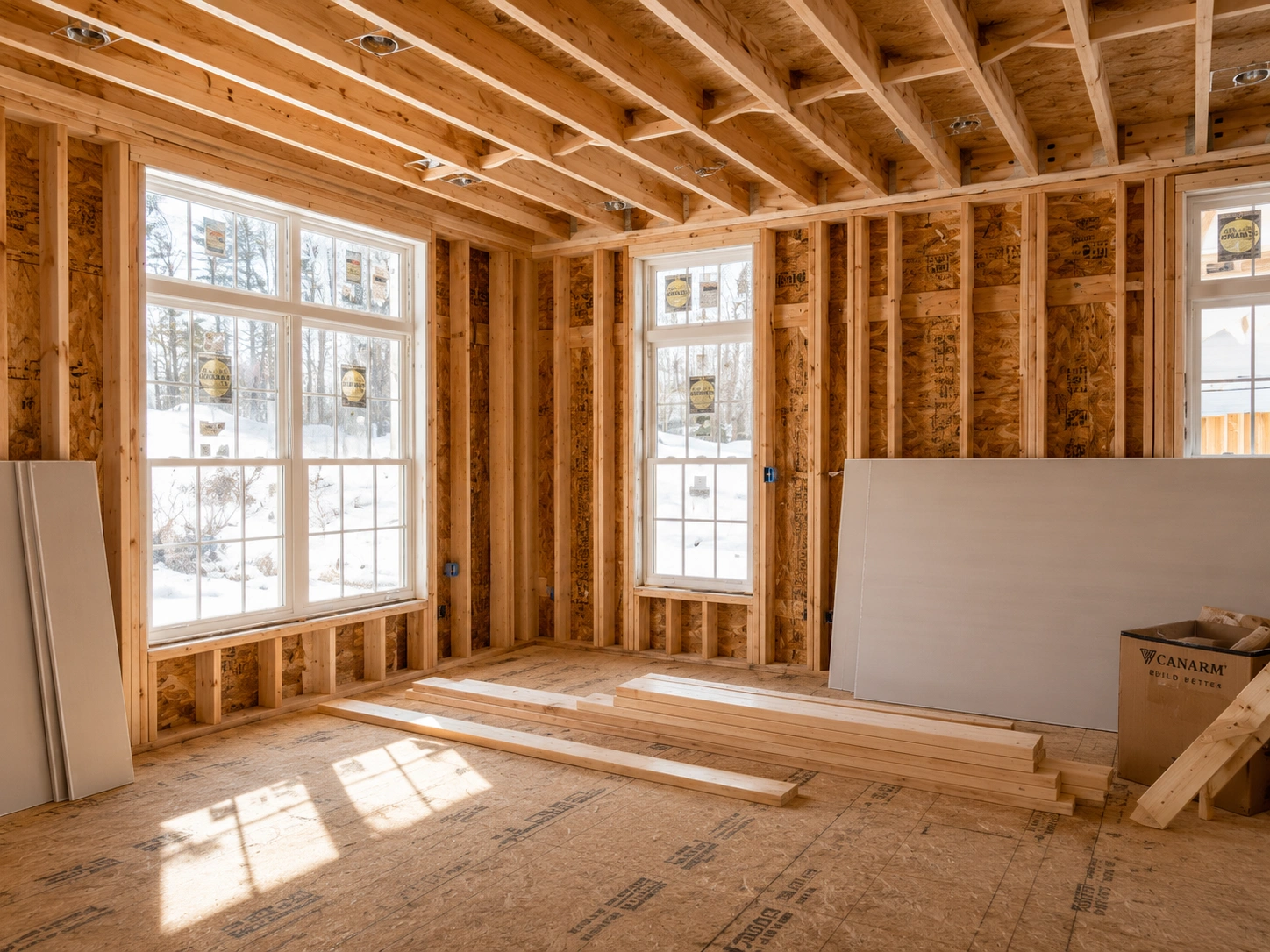
How to Compare the Roof and Air Sealing Options
Comfort complaints often come from distribution, solar exposure, leakage or weak insulation rather than from the nominal capacity of the equipment. Exterior materials should be selected with transition details in mind; matching color alone does not make an addition read as original to the house.
Site access affects excavation, concrete, material handling and staging. A buildable footprint can still be expensive if every operation must pass through a narrow side yard. Do not leave the scope exposed to an existing foundation being assumed to carry new loads without verification and pricing being finalized before site and utility constraints are understood. If those conditions are discovered only after work begins, the surrounding scope can expand unexpectedly.
In this roof & air sealing decision, air sealing, insulation and window changes alter loads and pressure relationships. Equipment decisions made before those changes can be oversized, poorly distributed or incompatible with the final envelope.
Field Conditions That Affect Roof & Air Sealing
- Show existing foundation and structural load path in the plans or written scope before construction starts.
- Show roof tie-in and drainage in the plans or written scope before construction starts.
- Record the agreed new-to-existing wall and air-barrier transitions before the field sequence is released.
- Identify the project role expected to compare outward and upward expansion using structure and yard impact.
- Put responsibility for the following in writing: investigate existing foundations before promising a second story.
In this roof & air sealing decision, the responsible team should test the preferred answer against zoning envelope, setbacks and lot constraints and existing foundation and structural load path before downstream work starts.
Cost and Schedule Effects for Roof & Air Sealing
- Document existing foundation and structural load path in the field before the team commits to a solution that relies on it.
- Show the planned alteration clearly enough to coordinate roof tie-in and drainage.
- Identify who owns the unresolved roof & air sealing assumption.
- Document the final roof & air sealing decision before the first dependent trade starts.
Roof valleys, low-slope intersections and wall-to-roof joints concentrate water, so they deserve early detailing and inspection.
Requirements to Confirm Early for Roof & Air Sealing
Turning the Roof & Air Sealing Choice Into a Buildable Plan
- Verify the existing condition of existing foundation and structural load path.
- Use new-to-existing wall and air-barrier transitions as a comparison criterion, not an afterthought.
- Compare roof & air sealing options using the full construction consequence of each path, not only the focal item.
- Record the final roof & air sealing decision before dependent construction is released.
- The next trade should start only after the roof & air sealing decision is documented.
The reason for this review is not to force the cheapest option.
Roof & Air Sealing: What Must Be Answered Before Field Work
- Which existing condition could make the preferred roof & air sealing option unbuildable?
- Is there an outside approval that could change the selected roof & air sealing path?
- What must be ordered or approved before the next roof & air sealing step?
